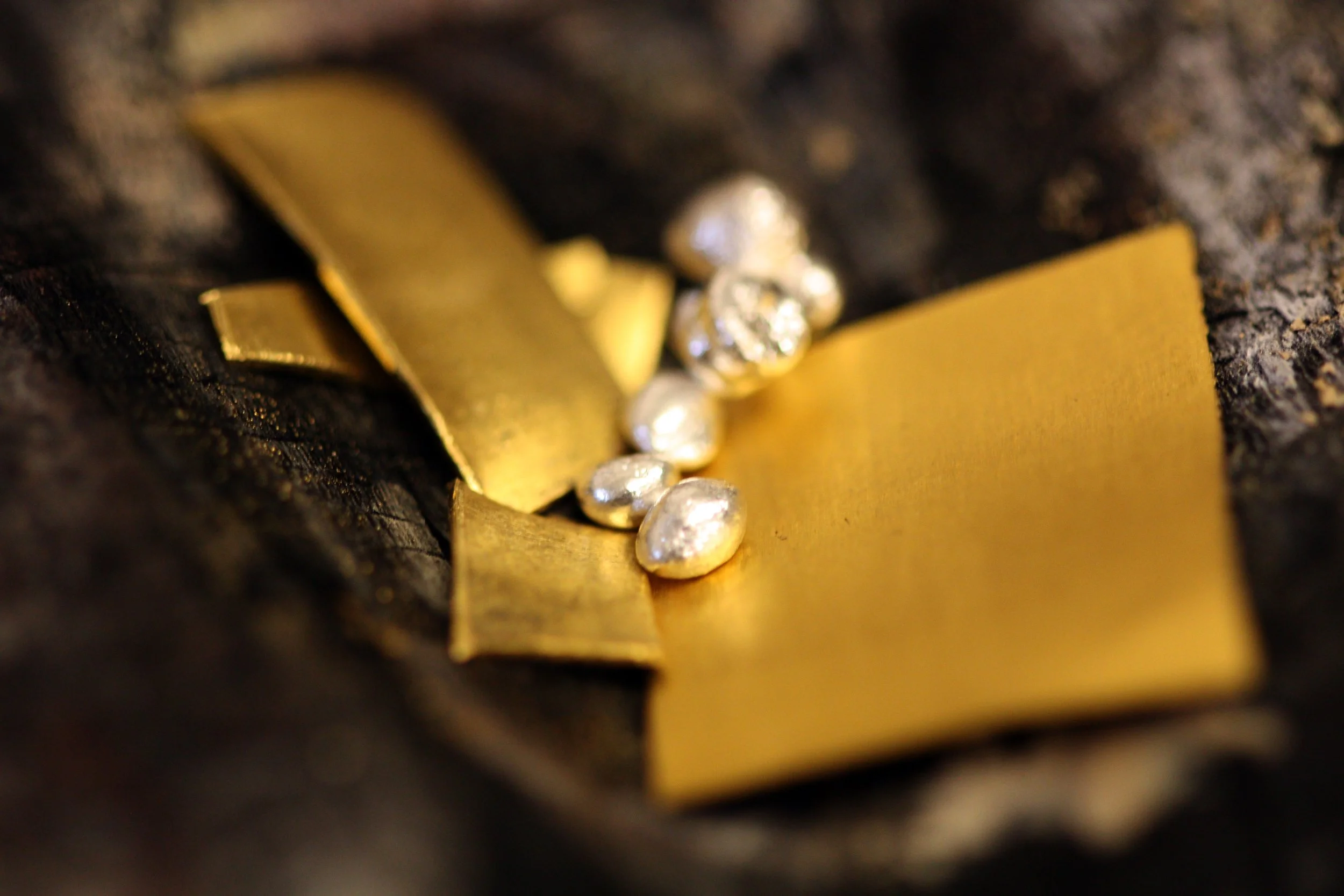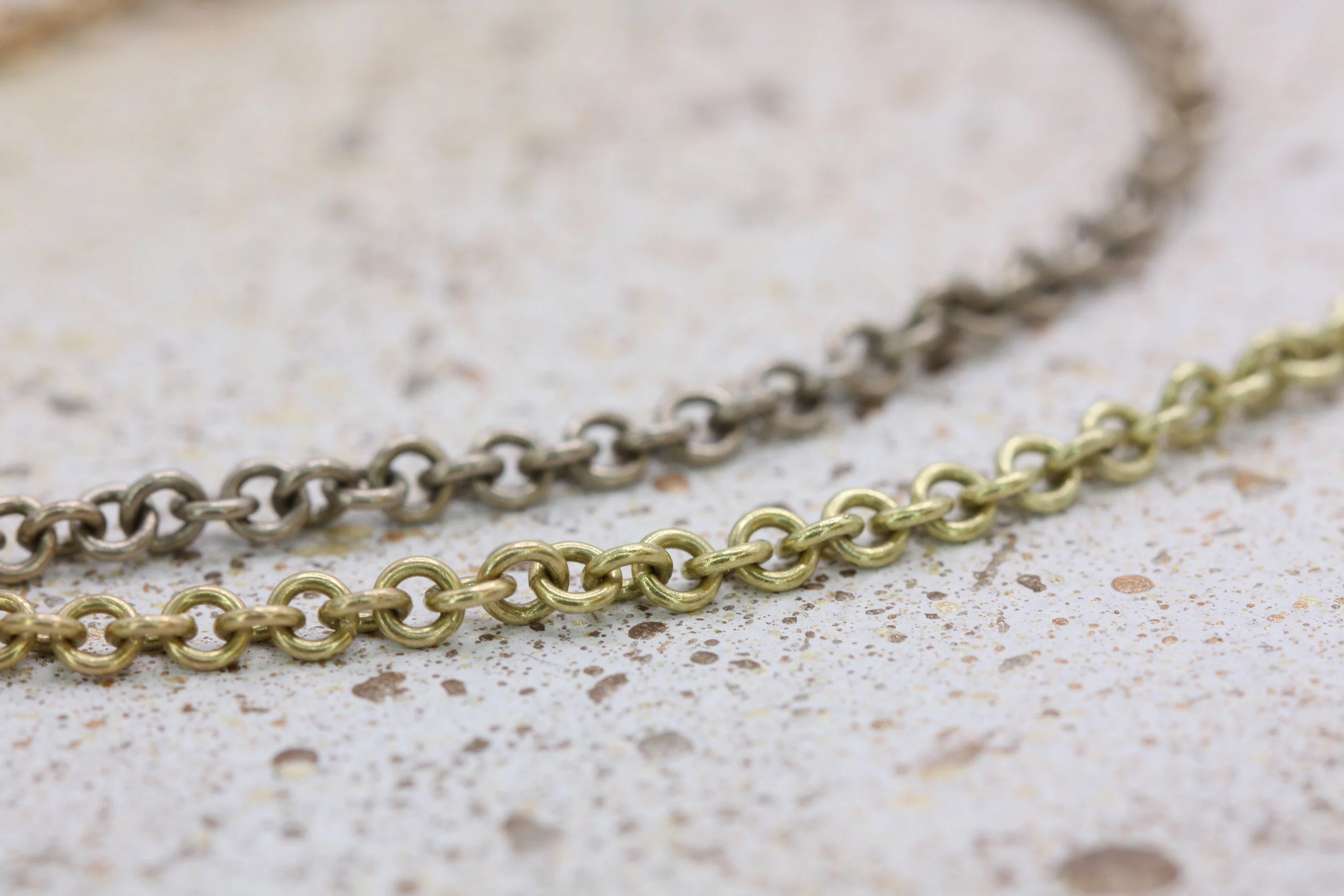
A Spectrum of Gold
Gold is available in a wide spectrum of colours, extending well beyond the familiar red, white, and yellow commonly found on the high street. As one of the few goldsmiths in the UK skilled in advanced alloying techniques, we have the unique capability to craft gold in distinctive hues unseen elsewhere. This expertise allows us to design vibrant jewellery using gold alone or to enhance and contrast exquisite gemstones with customised gold colours.
Gold Colours
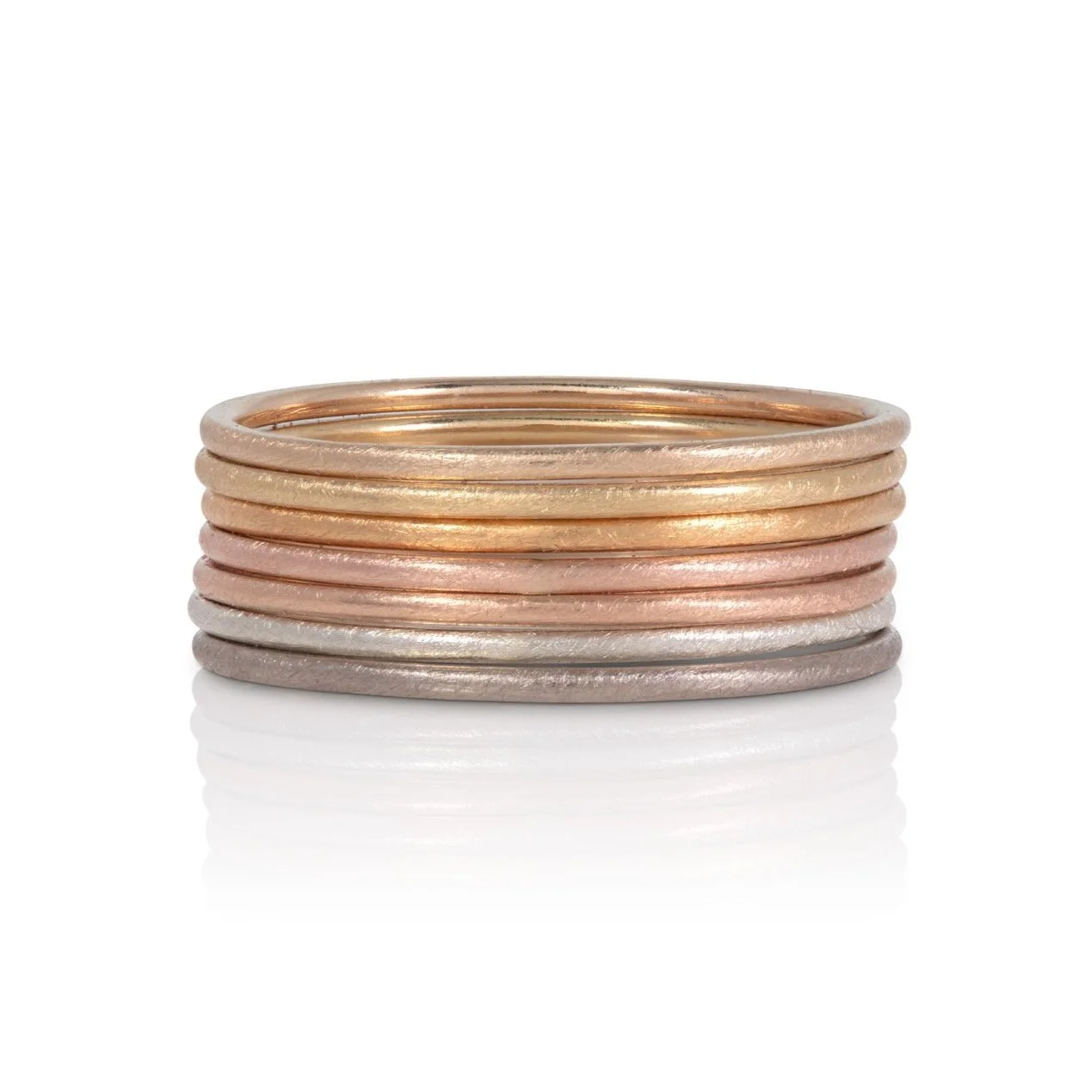
As we mentioned above we can create unique gold alloys and as part of our Masters at the Royal College of Art we even made 1g of every carat from 1ct through to 24ct. This enabled us to see the change in colour with the addition of more gold =, which created our first Spectrum piece.
-
Yellow gold is an alloy primarily composed of pure gold mixed with metals such as pure copper and fine silver.
The typical composition for 18-carat rose gold is approximately 75% gold, 12.5% copper, and 12.5% silver, although the exact ratios can vary slightly depending on the desired shade.
-
White gold is gold alloyed with white metals like palladium, nickel, silver, or platinum to lighten its yellow color, creating a grey-white colour. Commercially it is usually white rhodium plated to look more ‘white’ in colour.
The typical composition for 18-carat white gold is approximately 75% gold, 2.5% copper, and 22.5% palladium although the exact ratios can vary slightly depending on the desired shade.
-
Rose gold is made by alloying pure gold with a combination of copper and silver. The copper gives the metal its distinctive pinkish hue, while silver is added to balance the colour and enhance durability. The typical composition for 18-carat rose gold is approximately 75% gold, 22.5% copper, and 2.5% silver, although the exact ratios can vary slightly depending on the desired shade. Rose gold is prized for its warm, romantic tone and its strong resistance to tarnishing and scratching.

Gold Alloys
Alloying gold is somewhat similar to baking a cake, the ingredients are just a little more expensive and require a lot more heat than your home oven!
Gold alloying is the process of mixing pure gold with other metals to improve its strength, durability, and colour. Pure gold is very soft, so by combining it with metals such as copper, silver, or palladium, the resulting alloy becomes harder and better suited for making jewellery. The different metals added can also change the colour of the gold, producing variations like green gold, white gold, rose gold, or yellow gold. The quality of gold alloys is often measured in karats, with 24-karat gold being pure gold and lower karat numbers indicating a higher proportion of other metals.
Alloying ensures that gold jewellery is both beautiful and long-lasting.
Gold Sources
You may be wondering where we source our gold from? There are several places and companies we use to source the gold we work with including recycled, SMO| (Single Mine Origin), Fair Trade and Fair Mined Gold.
-
Most of the gold we use is from our suppliers who refine and recycle gold that already exists in the industry so mining in involved.
-
SMO (Single Mine Origin) Gold is exactly that, the supplier works directly with the mine so they know exactly where it came from. The miners are paid a fair wage and it is all traceable.
-
The Fairtrade Gold Standard includes strict requirements on working conditions, occupational health and safety, handling chemicals, women's rights, child labour and protection of the environment such as water sources and forests.
-
Fairmined is an assurance label that certifies gold from empowered responsible artisanal and small-scale mining organisations who meet world leading standards for responsible practices.